Thursday, 15 August 2013
Greenpeace BS
I've commented before about Frack-Off's spectacular hypocrisy, and a recent video that really brings out the science around shale gas development.
In this post, here's Greenpeace using bullshit in lieu of actually managing to get a story. This actually came out a little while ago, but it was just before Iain Stewart's Horizon documentary, and then events in Balcombe, which have somewhat dominated most of my "social media time".
In a post from Lawrence Carter of Greenpeace, who reckons he has some sort of scoop, trapping a Cuadrilla executive on tape "admitting that everything he says in public is bullshit". You can listen to the recording here, and, as always, judge for yourself.
Funnily enough, the tape cuts just after the "bullshit", although you can just about hear the "but" that comes afterwards. I've asked Lawrence for the rest of the tape (and I'm not the only one to do so), strangely enough it has not been forthcoming. Perhaps the tape just happened to conk out just at that point. Or maybe he goes on to say something along the lines of, as Nick Grealy suggests: "everything I say sounds like utter f***ing bullshit, but it's the real deal". Or as I imagine it might be: "everything I say sounds like utter f***ing bullshit, but it's actually backed up by peer reviewed science".
According to Lawrence, it "was something about renewables and shale gas living hand in hand, aka bullshit". I'm not sure how that ranks as bullshit, given the generally agreed consensus that large-scale renewable grid penetration requires quickly-dispatch-able gas power plants as back-up - read here for a recent report from Citi-Group on the issue, for example. This is borne out in real life too, as well as in studies: renewable energy has boomed in the USA the same time as the shale gas revolution. Texas is the undoubted 'home' of shale gas, yet renewable energy has grown significantly over the same time period.
Greenpeace have an annual turnover of over £200 million. That makes them a lot larger than the likes of Cuadrilla. I think that they have a certain responsibility to act in good faith as they pursue their agenda - bullshit like this simply does not cut it.

Monday, 12 August 2013
A message from the Balcombe front lines
I'm sure that if you're reading this blog, you're aware of the current protest ongoing in the village of Balcombe. The main impact for me has been a lot of radio interview requests, but also, if the Blogger stats page is to be believed, a surge of interest in this blog. For obvious reasons, the protest itself has had as much of an impact on the local community as the drilling itself. Reports from either side of the debate will tell you either that the locals are fed up to the back teeth of the imported rent-a-mob, or that the locals are joining in with gusto.
If you'll excuse me another colossal name-drop, chatting to Prof Iain Stewart after his visit to Pennsylvania for his Horizon documentary, one of the most striking impacts that he found wasn't the pollution or lack of it, but how drilling had divided communities. Sadly, it seems that this is already happening in Balcombe, as a message I received from a local resident will testify:
If you'll excuse me another colossal name-drop, chatting to Prof Iain Stewart after his visit to Pennsylvania for his Horizon documentary, one of the most striking impacts that he found wasn't the pollution or lack of it, but how drilling had divided communities. Sadly, it seems that this is already happening in Balcombe, as a message I received from a local resident will testify:
A few months ago, I like many had never heard of fracking! Just a few lines to put you in the picture about who I am. Malcolm Thomason is my name, a 56 year old Balcombe born & bred guy. Until a couple of weeks ago most in the world had never heard of our lovely village with a population of about 1750. Balcombe is about 16 miles due north of Brighton, 8 miles south of Gatwick Airport in the Sussex Weald. We have a lake, mill and the fantastic Ardingly Reservoir - most of reservoir is in Balcombe. We have a pub, social club and a village shop. Not a lot but its nice and mainly quiet. But in recent years the outsiders, not village types have moved here, paying vast prices for houses near the main London-Brighton rail line with easy access to Croydon & London. I would say 25/30 years ago I knew 90% of the Village and now I dont know 90%. Thats the short introduction done with !
In 1986 Conoco drilled the same site next to B2036 south of village for 23 days. The site is 600-700yds due south of my house as crow flies. In 1986 there were no protesters, in fact we were invited to view site and to see what was going on, a very interesting visit it was as well. Conoco found some oil, not in large quantities but it was there.
How things have changed in July/Aug 2013, we have now been invaded by a vast array of people of all descriptions. Another 1000 NoDashForGas folk are setting up a camp in a field from 16-21August, the same group that shut down West Burton power station for three days last year! They seem intent on shutting down also the Cuadrilla site in Balcombe as well.
Not knowing about fracking I set of to research the subject! Plenty info about if one cares to take time and look that shows in my opinion that it is not dangerous in any shape or form! Just scaremongers putting out propaganda to try and convince the gullible that its not the thing to do! I stumbled across James Verdon twitter page and read with interest his blogs on fracking and learnt a lot more than I already knew. I only wish the antis in Balcombe would view these blogs, but a lot can only see the the water being polluted, the fantastic Victorian Balcombe Viaduct finished in 1841 collapsing through an earthquake, and the blue skies turning black!
This issue is already dividing a village with people who used to talk to each other, now trying to avoid each other, a sad state of affairs i think you all will agree!
Thursday, 8 August 2013
Guardian given lifelong ban on talking sense
In the latest Guardian shale shock story, a shale gas company in Pennsylvania (Range Resources) stands accused of poisoning a family's water (the Hallowiches), then imposing a court gagging order to silence the family, including the children, from ever talking publicly about fracking ever again.
In actual fact, this story has been 'out' in the US for quite some time, so it's hardly the scoop that the Guardian are claiming. More importantly, however, are the numerous facts left out in the name of a good scare story.
Court gagging orders are never going to make for good PR, but the key question must be: did Range Resources actually cause contamination of the Hallowich water supplies or air quality? Everything else is just lawyers throwing their weight around.
Pennsylvania DEP conducted an investigation into the Hallowich groundwater, and their findings are available. Here are their conclusions, which I shall selectively quote from below:
Acrylonitrile and styrene appear to have been identified as an offending chemicals. However,
There's no doubt that gagging clauses make for bad PR. However, this case shows that just because they have been used, doesn't mean that there is evidence for shale gas pollution. In fact, as the Pittsburgh-Tribune has the headline, it might be better to describe the situation as: Couple collect $750K settlement in fracking case with no medical evidence.
The information I've presented above is easily-locatable in the public domain. Which begs the question - why does none of it make it into the Guardian's latest scare story? I think we're all fine with media organisations that take a well established editorial line - it's unlikely the Guardian are ever going to favour shale gas extraction. However, I'm a lot less happy with irresponsible scare-mongering, which is what I see this to be.
In actual fact, this story has been 'out' in the US for quite some time, so it's hardly the scoop that the Guardian are claiming. More importantly, however, are the numerous facts left out in the name of a good scare story.
Court gagging orders are never going to make for good PR, but the key question must be: did Range Resources actually cause contamination of the Hallowich water supplies or air quality? Everything else is just lawyers throwing their weight around.
Pennsylvania DEP conducted an investigation into the Hallowich groundwater, and their findings are available. Here are their conclusions, which I shall selectively quote from below:
you allege that Range Resources has contaminated the supply [...] After a review of the information, including primarily water analyses, we cannot affirm your conclusions.Importantly, Range actually drilled their well in July 2007. The Hallowiches only purchased the property in June 2007, and didn't drill their water well until October 2007, 3 months after the shale well was drilled. Therefore they can have no evidence regarding water quality prior to shale drilling.
Acrylonitrile and styrene appear to have been identified as an offending chemicals. However,
RT’s [a water testing lab] own sampling did not measure any styrene at the reported detection level. How styrene might be related to gas well drilling is not clear. However, the water lines in the Hallowich household, as well as from the water well to the house, are PVC which contains styrene.and
Acrylonitrile is used in the manufacture of plastics, glues, pesticides, ABS pipe (common drain line pipe used in homes; the “A” in ABS stands for acrylonitrile ), synthetic rubber, acrylics, carpets, dinnerware, food containers, toys, luggage, automotive parts, appliance, telephones, among others. It can also be washed from the air by rain and then enter the groundwater system. There is a plastic rock which has been placed over the water well and could be leaching contaminants into the ground during rainfall events, which interestingly enough is when Mrs. Hallowich reports that the acrylonitrile values seem to increase based upon on-going sampling that apparently has been occurring.This might be why, in the absence of any data prior to drilling, the DEP tested water from nearby wells close to the shale drilling, and did not find acrylonitrile or styrene:
the results taken at a neighboring property (163 Avella Road), which is also close to the gas well, only shows a lead problem; the other four parameters are either non-detect or within drinking water standards.In conclusion, the DEP summarise:
Mrs. Hallowich alleges that the drilling of the gas well polluted the aquifer. [...] we are lacking any direct evidence to prove this assertion.
we question your conclusions about the contamination problems to the Hallowich water supply. The only parameter that is clearly above the MCL is manganese, and we cannot clearly link it to the drilling of the Range Resources gas well. Therefore the DEP cannot issue a water supply replacement/restoration order to Range Resources.This area also formed part of a DEP study into air quality impacts of Marcellus drilling, similarly finding that
Given the above data, it is perhaps not surprising to find that, in the court documents, the Hallowiches concede that:
the screening results found during the five-week study did not indicate a potential for major air-related health issues associated with the Marcellus Shale natural gas activities
1. With respect to Plaintiff minors’ alleged claims involve nuisance and personal injury claims, there is presently no medical evidence that these symptoms are definitively related to any exposure to the activities of Defendants...When the court order to 'un-gag' these documents were made, there was much excitement in the media in the hope that a smoking gun was about to be revealed. Much has been made about such gagging orders: surely now the release of one such set of documents would catch the frackers red-handed. Instead, they found instead that once again, water and air testing by the relevant government agencies had failed to find evidence of fracking-induced contamination:
2. The minors have alleged claims for nuisance and personal injury in connection with Defendants’ business operations. There is presently no medical evidence supporting that these claims related to any exposure to Defendants’ business operations as set forth in Plaintiffs’ Complaint.
There's no doubt that gagging clauses make for bad PR. However, this case shows that just because they have been used, doesn't mean that there is evidence for shale gas pollution. In fact, as the Pittsburgh-Tribune has the headline, it might be better to describe the situation as: Couple collect $750K settlement in fracking case with no medical evidence.
The information I've presented above is easily-locatable in the public domain. Which begs the question - why does none of it make it into the Guardian's latest scare story? I think we're all fine with media organisations that take a well established editorial line - it's unlikely the Guardian are ever going to favour shale gas extraction. However, I'm a lot less happy with irresponsible scare-mongering, which is what I see this to be.
Tuesday, 6 August 2013
Update: Map of existing UK oil and gas wells
In a previous post I discussed the 2000 or so pre-existing onshore oil and gas wells in the UK that rarely seem to get a mention when people talk about shale gas extraction despoiling our wonderful countryside. Well, in a quiet moment at work I made a map showing where they are (click to enlarge). Each red pin is an oil or gas well drilled between 1902 to the present day.
Update: I have modified the map to colour-code the wells by the date they were drillied. Pre-1949 are cyan, 1950 - 1979 are yellow, 1980 - 1999 are (light) pink, and 2000 - 2013 are (dark) purple.

Update 2: You can download the original data from the DECC website at:
https://www.gov.uk/government/uploads/system/uploads/attachment_data/file/224856/Landwells22July2013.xlsx. Lat/long data is in Deg/Min/Sec.
I created .kml files to plot the data in Google earth. You can download the 4 files at:
http://www1.gly.bris.ac.uk/~JamesVerdon/Downloads/uk_wells_1900-1949.kml
http://www1.gly.bris.ac.uk/~JamesVerdon/Downloads/uk_wells_1950-1979.kml
http://www1.gly.bris.ac.uk/~JamesVerdon/Downloads/uk_wells_1950-1999.kml
http://www1.gly.bris.ac.uk/~JamesVerdon/Downloads/uk_wells_2000-present.kml
Update: I have modified the map to colour-code the wells by the date they were drillied. Pre-1949 are cyan, 1950 - 1979 are yellow, 1980 - 1999 are (light) pink, and 2000 - 2013 are (dark) purple.

Update 2: You can download the original data from the DECC website at:
https://www.gov.uk/government/uploads/system/uploads/attachment_data/file/224856/Landwells22July2013.xlsx. Lat/long data is in Deg/Min/Sec.
I created .kml files to plot the data in Google earth. You can download the 4 files at:
http://www1.gly.bris.ac.uk/~JamesVerdon/Downloads/uk_wells_1900-1949.kml
http://www1.gly.bris.ac.uk/~JamesVerdon/Downloads/uk_wells_1950-1979.kml
http://www1.gly.bris.ac.uk/~JamesVerdon/Downloads/uk_wells_1950-1999.kml
http://www1.gly.bris.ac.uk/~JamesVerdon/Downloads/uk_wells_2000-present.kml
Thursday, 1 August 2013
Talking about Balcombe on 5Live, and is the UK oil industry a victim of its own success?
With the protest ongoing outside Cuadrilla's drill site near Balcombe, it's somewhat inevitable that I'd end up on the radio again - 5Live Drive once again. I've included the whole segment, including Bianca Jagger, a man from Blackpool who finds the whole shale gas thing a little boring, Vanessa Vine from Frack-Free-Sussex who finds the whole thing very exciting, and finally I get squeezed in at the end.
Beyond giving you the chance to enjoy my honey-ed tones once more, there are a couple of points that arose from this interview that I'd like to expand on.
The first thing that came to mind while listening to the anti-fracking interviewee was the issue of geological dread in public perception of risk. The concept of 'dread' in public risk perception is well established. From Wikipedia, a dread risk elicits visceral feeling of terror, uncontrollable, and catastrophe. It was coined in an attempt to understand why public perception of risk is often very different to expert assessment of risk. It is often that sense of an unknown danger that provokes feelings of dread. It was initially used to describe feelings towards nuclear power, but I think it applies equally to things like flying (for some people), but especially GM food, and now fracking.
Quoting the interviewee, fracking is 'messing with subterranean geology', and 'we cannot legislate for the vagaries of subterranean geology, it's such a human arrogance'. It seems that the public has this idea that the subsurface is unknowable and uncontrollable, leading to feelings of dread. I would argue that while the subsurface can no doubt be a challenging environment, there are hundreds of thousands, if not millions of people, geologists/geophysicists/hydrologists/geochemists etc., for whom understanding and making use of the subsurface is the bread and butter of their day to day life.
Geologists (Iain Stewart aside, perhaps) don't talk enough to the general public. We saw this in the furore over Iain Duncan Smith's comments about shelf-stackers being more important than geologists, where geologists finally had the gumption to point out to the rest of the world how important they actually are. And we are incredibly important.
Take a look at all the objects around you and in your life. If it's not made of animal (wool, leather) or plant (wood, cotton) then chances are it's made of something extracted from this apparently unknowable subterranean geology, that apparently we shouldn't be messing with.
It might be stone, which has to be quarried, cement and concrete products made from quarried aggregates and limestone. If it's plastic or synthetic then it's made from oil. If it's metal then that metal had to be mined somewhere. Moreover, all of the energy we use involves the subsurface as well. Hydrocarbons are the most obvious example. But where does the uranium come from that we put in our nuclear power plants? What about renewable sources, surely these will take us away from that dreadful subterranean geology with which thou shalt not mess? Well, a typical wind turbine needs something close to 100kg of neodymium, which can only be found in a few places, and mining it is not exactly a pleasant process. And hydroelectric? Well, it's well established that reservoir impoundment for hydroelectric can produce large earthquakes - for example the 2008 magnitude 7.9 Sichuan earthquake, which killed 80,000 people, has been linked with the impoundment of the Zipingpu Dam. Slightly more dramatic than the Blackpool tremor I feel.
Much of human endeavor has been based on 'messing with subterranean geology'. During fracking, we can use geophysical methods to monitor exactly where the induced fractures have gone, and to ensure that they are wholly contained within the targeted shale beds. As geologists, we have to accept that the public are unlikely to fully understand what we do. However, shale gas extraction is not an uncontrolled, poorly understood process. To claim that it is is to do insult to the thousands, or millions, of geologists around the world who do this kind of thing, successfully, every day.
Speaking of success, the events in Balcombe raise a second point. I am wondering whether the current UK onshore oil and gas activities have been a victim of their own success in hiding their operations from the public for the last 50 years.
Protestors talk about thousands of well sites despoiling our beautiful countryside. Which is strange, because we already have thousands of onshore wells across our countryside. Literally, 2000 wells - you can download a spreadsheet listing them all here. 10% of these, so about 200, have been hydraulically stimulated. Yet no-one seems to even know that they are there, and certainly no-one seems to be claiming that 50% of them are leaking hydrocarbons and/or carcinogens to contaminate groundwater.
Our onshore industry has been very effective at (a) making sure that they don't cause environmental problems and (b) doing everything that they can to stay out of the public view. I grew up a few miles down the road from the Humbly Grove Field, which is here (as per my Fort Worth post, go to StreetView and see if you can even see it), yet until I went to university I didn't even know it was there.
Now, when a new well is proposed, because people don't know anything about the onshore industry, the thought of drilling in the rural UK countryside seems crazy, (indeed it even induces dread), even though there are 2000 wells already there.
It's understandable that when we seek to understand shale gas impacts we look to the US, and we try to understand the issues they have faced, and what the development has ended up looking like. However, we should also look to our own industry. If we want to know whether it is possible to conceal well pads without despoiling the countryside, we should look at our own ability to do so, not what American regulators and planning rules allow. If we want to know whether wells are likely to leak, we should look at whether our own 2,000 wells are leaking, not whether wells drilled under American regulatory and inspection regimes are leaking.
There's one major aspect of the media attention at Balcombe that has surprised me. There is ALREADY an oil well on the Balcombe site, drilled in the 1980s by Conoco. They abandoned it because the price of oil dropped to $10 per barrel, while now it is over $100. I've not seen this well mentioned in many reports from Balcombe. Has the old well has been causing problems for Balcombe for the last 25 years? I doubt it. I would love to know what it is about the new well that people see problems? Why will it be different, or more likely to cause problems, than the one that is already there?
Beyond giving you the chance to enjoy my honey-ed tones once more, there are a couple of points that arose from this interview that I'd like to expand on.
The first thing that came to mind while listening to the anti-fracking interviewee was the issue of geological dread in public perception of risk. The concept of 'dread' in public risk perception is well established. From Wikipedia, a dread risk elicits visceral feeling of terror, uncontrollable, and catastrophe. It was coined in an attempt to understand why public perception of risk is often very different to expert assessment of risk. It is often that sense of an unknown danger that provokes feelings of dread. It was initially used to describe feelings towards nuclear power, but I think it applies equally to things like flying (for some people), but especially GM food, and now fracking.
Quoting the interviewee, fracking is 'messing with subterranean geology', and 'we cannot legislate for the vagaries of subterranean geology, it's such a human arrogance'. It seems that the public has this idea that the subsurface is unknowable and uncontrollable, leading to feelings of dread. I would argue that while the subsurface can no doubt be a challenging environment, there are hundreds of thousands, if not millions of people, geologists/geophysicists/hydrologists/geochemists etc., for whom understanding and making use of the subsurface is the bread and butter of their day to day life.
Geologists (Iain Stewart aside, perhaps) don't talk enough to the general public. We saw this in the furore over Iain Duncan Smith's comments about shelf-stackers being more important than geologists, where geologists finally had the gumption to point out to the rest of the world how important they actually are. And we are incredibly important.
Take a look at all the objects around you and in your life. If it's not made of animal (wool, leather) or plant (wood, cotton) then chances are it's made of something extracted from this apparently unknowable subterranean geology, that apparently we shouldn't be messing with.
It might be stone, which has to be quarried, cement and concrete products made from quarried aggregates and limestone. If it's plastic or synthetic then it's made from oil. If it's metal then that metal had to be mined somewhere. Moreover, all of the energy we use involves the subsurface as well. Hydrocarbons are the most obvious example. But where does the uranium come from that we put in our nuclear power plants? What about renewable sources, surely these will take us away from that dreadful subterranean geology with which thou shalt not mess? Well, a typical wind turbine needs something close to 100kg of neodymium, which can only be found in a few places, and mining it is not exactly a pleasant process. And hydroelectric? Well, it's well established that reservoir impoundment for hydroelectric can produce large earthquakes - for example the 2008 magnitude 7.9 Sichuan earthquake, which killed 80,000 people, has been linked with the impoundment of the Zipingpu Dam. Slightly more dramatic than the Blackpool tremor I feel.
Much of human endeavor has been based on 'messing with subterranean geology'. During fracking, we can use geophysical methods to monitor exactly where the induced fractures have gone, and to ensure that they are wholly contained within the targeted shale beds. As geologists, we have to accept that the public are unlikely to fully understand what we do. However, shale gas extraction is not an uncontrolled, poorly understood process. To claim that it is is to do insult to the thousands, or millions, of geologists around the world who do this kind of thing, successfully, every day.
Speaking of success, the events in Balcombe raise a second point. I am wondering whether the current UK onshore oil and gas activities have been a victim of their own success in hiding their operations from the public for the last 50 years.
Protestors talk about thousands of well sites despoiling our beautiful countryside. Which is strange, because we already have thousands of onshore wells across our countryside. Literally, 2000 wells - you can download a spreadsheet listing them all here. 10% of these, so about 200, have been hydraulically stimulated. Yet no-one seems to even know that they are there, and certainly no-one seems to be claiming that 50% of them are leaking hydrocarbons and/or carcinogens to contaminate groundwater.
Our onshore industry has been very effective at (a) making sure that they don't cause environmental problems and (b) doing everything that they can to stay out of the public view. I grew up a few miles down the road from the Humbly Grove Field, which is here (as per my Fort Worth post, go to StreetView and see if you can even see it), yet until I went to university I didn't even know it was there.
Now, when a new well is proposed, because people don't know anything about the onshore industry, the thought of drilling in the rural UK countryside seems crazy, (indeed it even induces dread), even though there are 2000 wells already there.
It's understandable that when we seek to understand shale gas impacts we look to the US, and we try to understand the issues they have faced, and what the development has ended up looking like. However, we should also look to our own industry. If we want to know whether it is possible to conceal well pads without despoiling the countryside, we should look at our own ability to do so, not what American regulators and planning rules allow. If we want to know whether wells are likely to leak, we should look at whether our own 2,000 wells are leaking, not whether wells drilled under American regulatory and inspection regimes are leaking.
There's one major aspect of the media attention at Balcombe that has surprised me. There is ALREADY an oil well on the Balcombe site, drilled in the 1980s by Conoco. They abandoned it because the price of oil dropped to $10 per barrel, while now it is over $100. I've not seen this well mentioned in many reports from Balcombe. Has the old well has been causing problems for Balcombe for the last 25 years? I doubt it. I would love to know what it is about the new well that people see problems? Why will it be different, or more likely to cause problems, than the one that is already there?
Wednesday, 31 July 2013
Seismometer deployment to monitor drilling at Balcombe
If you follow me on twitter as
well as reading my blog will know that I go by the name @TheFracDoctor. This choice of
name was influenced in part by the fact that I had recently finished my PhD,
and as anyone who has experienced the flush of post-viva success, there is the
temptation to put the word ‘Doctor’ in front of everything.
But also it is the role of the
doctor to monitor the health of his patient, and that is how I see seismic and micro-seismic
monitoring – a tool to monitor the health of a fracture stimulation.
In the last few weeks I’ve had
the opportunity to do this for real in the UK for the first time: deploying
seismometers around Cuadrilla’s planned Balcombe well. I’ll note right now that
the current Cuadrilla plan is to drill into limestone for conventional oil,
with no intention of hydraulic fracturing at this stage, but we wanted to get
some experience deploying seismometers for this sort of situation.
However, Balcombe is the site of
the now-infamous ‘Battle
of Balcombe’ and has been at the center of much debate of unconventional
gas extraction (these stations were put in a month ago, well before the events
of last week). Of particular focus has been the risk of seismic activity to the
Balcombe Viaduct.
This spectacular bridge, built in
1841, still carries the main London-to-Brighton rail line:

After the seismic events during
stimulation at the Preese Hall well, Blackpool, concerns were raised about the
possibility of similar seismic activity affecting this bridge. So we decided to
deploy seismometers while they drill their Balcombe well. There are no plans
for fracking at the moment, so we’re not expecting any seismic activity. Our
main aims were (1) to get some experience deploying seismic stations in rural
England, and (2) to record baseline activity prior to drilling.
Baseline data will help us
understand the noise levels in the area, which will determine the size of the
smallest earthquake we can detect – obviously the lower the noise level, the
smaller event you can detect. The current traffic
light scheme for seismicity proposed by DECC requires events as small as
M0.0 to be detected. We want to see if this will be possible with a small array
of 4 surface seismometers (we will compute the expected shaking from an M0.0
event, and see if it emerges above the noise).
Baseline data will also enable to
see what changes (if any) drilling activities produce.
I will post updates as and when
we collect and analyse the data. For now, this seems like a good time to share
some holiday snaps, so you get to learn about what we do when we deploy
seismometer arrays, and what they look like.
Firstly, here’s the piece of kit
that we use: a Trillium
120 seismometer:

This is a fairly standard piece
of kit in earthquake seismology, capable of measuring the vibration of the
earth across a wide frequency, from long periods (up to 60 seconds) up to the
sampling rate of 250Hz.
To reduce the noise from things
like wind and rain, they need to be buried 50cm or so under ground. Which means
you have to dig a hole. I used to work on building sites during my A-levels,
and I was delighted when I got my degree, knowing that my days of manual labour
were over (because digging holes all day is TOUGH work). Yet, a masters degree
and PhD later, and here I am digging holes all day!


Once the pit is ready, the
seismometer is carefully placed into the hole:

The batteries and data logger go
in the steel box next to the pit. We run cables, insulated inside fire hose,
from the instrument into the box:

Initial covering for the
instrument, to further minimise surface noise, is provided by its ‘lid’, the black dome
you can see below:

Once we are happy that the
instrument is working properly, we fill the hole (being careful not to
dislodge the insulating cover from the instrument. We lay a waterproof sheet
just below the surface, and pile turf on top as a final covering:

Finally, we put a small
chicken-wire fence around the station. This is more of a deterrent than
anything else: it’s not likely to stop a marauding cow, nor is it really
capable of keeping out a determined rodent (animals chewing on loose cables is
a real problem in many seismic deployments):

And after all that (a couple of
hours work at least), you have your seismic station:

We placed 4 stations in total,
including one a few hundred yards from the viaduct:

As we set this station up, we
could see the vibrations from the trains going past every 5 minutes recorded on
our seismometer. It will be interesting to see what caused more vibration – the
Preese Hall earthquakes or the train going past at a distance of a couple of
hundred yards. After all, the initial concern at Balcombe was that seismicity
would trouble the bridge – even though this is a bridge that is being shaken by
an express train every 5 minutes.
We enjoyed our two days in the
picturesque British countryside, and we were very glad we missed all the
protestors. Fortunately, the stations are all a couple of km at least from the
London Road protest site, and accessible from other roads, so that’s a gauntlet
we won’t have to run. The only disturbance we saw was from these guys:

So there’s our seismic deployment
in Balcombe. More to follow once we’ve analysed the data.
Saturday, 27 July 2013
More studies on groundwater methane in Pennsylvania - no correlation with gas wells
Warning: High concentrations of methane in water wells, well enclosures and other confined spaces can cause explosions!
Here's a fact sheet from the Pennsylvania Dept of Environmental Protection providing information about how to deal with methane in your water well (it needs to be vented so that dangerous accumulations do not build up).
Have the DEP been forced to release this emergency information in response to increases in methane contamination as shale gas drilling spreads across the land?
No, in fact if you look closely in the bottom right corner, you can see that this information sheet was published in January 2004: long before shale gas came to Pennsylvania. This provides further demonstration of elevated methane in groundwater was common prior to drilling, as has already been indicated in baseline studies.
Why does this matter? Well, in a previous post I discussed the recent Duke findings of elevated methane in water near to gas wells in Pennsylvania, and I suggested that the very non-random way in which wells were chosen for sampling may well affect some of their conclusions. I suggested that to test their conclusions, more uniform and comprehensive sampling would be required.
Well, in a recent paper published in Groundwater, we have some new data. Molofsky et al tested 1701 samples (as opposed to only 141 tested by the Duke team). The two pictures below show the sampling from Molofsky (above) and the Duke paper (below), I leave it to you to judge which provides the more comprehensive sampling:


Of the 1701 samples tested by Molofsky, 322 were within 1km of a gas well, while 1379 are characterised as being 'pre-drill' - that is no gas well within 1km at the time of sampling, taken as part of a baseline surveys conducted by the DEP.
Molofsky et al found that 78% of sampled wells had detectable methane concentrations (hence the need for the DEP's fact sheet above), and 3.4% had levels exceeding the DEP's minimum level of 7mg/L.
The size of the circles in the Molofsky figure represent the amount of methane found in groundwater. They've helpfully plotted topography in their figure - even without the help of statistics you can see a correlation with being in a valley and having elevated methane (although the stats bear this correlation out), and upland areas with low methane. Why would being in a valley lead to elevated concentrations of naturally occurring methane? Well, a picture (from a Molofsky presentation I found online) tells a thousand words:

What about correlations between methane and natural gas wells, as found by the Duke study? Well, with 10 times as many data points, Molofsky et al find zero correlation between methane and natural gas wells. As their subsection title puts it: 'No Regional Association of Methane with Gas Production'.
Here's a fact sheet from the Pennsylvania Dept of Environmental Protection providing information about how to deal with methane in your water well (it needs to be vented so that dangerous accumulations do not build up).
Have the DEP been forced to release this emergency information in response to increases in methane contamination as shale gas drilling spreads across the land?
No, in fact if you look closely in the bottom right corner, you can see that this information sheet was published in January 2004: long before shale gas came to Pennsylvania. This provides further demonstration of elevated methane in groundwater was common prior to drilling, as has already been indicated in baseline studies.
Why does this matter? Well, in a previous post I discussed the recent Duke findings of elevated methane in water near to gas wells in Pennsylvania, and I suggested that the very non-random way in which wells were chosen for sampling may well affect some of their conclusions. I suggested that to test their conclusions, more uniform and comprehensive sampling would be required.
Well, in a recent paper published in Groundwater, we have some new data. Molofsky et al tested 1701 samples (as opposed to only 141 tested by the Duke team). The two pictures below show the sampling from Molofsky (above) and the Duke paper (below), I leave it to you to judge which provides the more comprehensive sampling:

Molofsky et al found that 78% of sampled wells had detectable methane concentrations (hence the need for the DEP's fact sheet above), and 3.4% had levels exceeding the DEP's minimum level of 7mg/L.
The size of the circles in the Molofsky figure represent the amount of methane found in groundwater. They've helpfully plotted topography in their figure - even without the help of statistics you can see a correlation with being in a valley and having elevated methane (although the stats bear this correlation out), and upland areas with low methane. Why would being in a valley lead to elevated concentrations of naturally occurring methane? Well, a picture (from a Molofsky presentation I found online) tells a thousand words:

What about correlations between methane and natural gas wells, as found by the Duke study? Well, with 10 times as many data points, Molofsky et al find zero correlation between methane and natural gas wells. As their subsection title puts it: 'No Regional Association of Methane with Gas Production'.
Oppostion to shale gas - based on science?
Is opposition to shale gas development based on science, or is it simply about scaring local residents? Here's the latest video from Frack-Off. You decide:
Credit to www.shalegas-europe.eu for finding this little beauty. You can go to their link to see some actual scientists (mainly from the BGS) talking about shale gas.
Credit to www.shalegas-europe.eu for finding this little beauty. You can go to their link to see some actual scientists (mainly from the BGS) talking about shale gas.
Monday, 22 July 2013
Spot the Well Pads in Dallas-Fort Worth
A few weeks ago, Boris Johnson suggested bringing shale gas drilling to the outskirts of London. Surely this area is far too overpopulated to have space for such activity? Perhaps not, if the experience of Dallas-Fort Worth is anything to go by, as I mentioned during a recent radio interview.
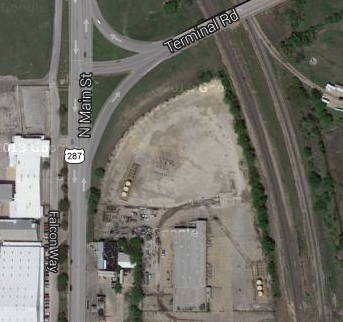
So, lets take a look at a shale gas drilling site in Fort Worth. Here's a portion from the air:
 The runways you can see are those of Fort Worth Meacham International Airport. Can you see the shale gas well site? You've probably missed it, so I've circled the most obvious evidence - two rows of yellow tanks:
 Lets zoom in for a closer look:
 You can see the tanks more clearly now, although the well-heads themselves are harder to see. Slightly frustratingly, when you try to zoom in on Google maps, the view changes to an earlier photo, but this is actually a good thing because you can see the wells under construction: many containers of equipment around the edge of the pad, and only a couple of well-heads placed:
 You can also go to StreetView to see the site up close and personal:

 You can see the 9 well heads, with 'Christmas Trees' on top of them, and the tanks to one side. These tanks are likely collecting produced water coming up with the gas. You can see that there is no need for the big, open ponds for wastewater that have been blamed for causing problems in Pennsylvania (and which are illegal in the UK).
So, how much is this single pad worth? It has 9 wells. The average total production for US shale gas wells is currently something like 3 bcf (billion cubic feet) over their lifetime, so this pad is likely to produce 27 bcf. 1 bcf contains approximately 1 million MMBTU, so 27 bcf is 27 million MMBTU. The current US gas price is approximately $4 per MMBTU, so the total gas coming from this single pad will be worth over $100 million. In the UK, gas prices are currently more like £8 per MMBTU, so a similar pad in the UK might produce a volume of gas worth £200 million.
I'll admit to being a bit of a Google Maps/Earth geek, but it really is worth checking it out, so that you can explore the site for yourself from all the angles that StreetView provides. Here's the link, go and have an explore. And you can ask yourself, knowing the value of a single such well site to the UK economy might be over £200 million, can I, or can I not, accept their development in the UK? Personally, I struggle to think of many alternatives that can give as much buck for such a small footprint.
So, lets take a look at a shale gas drilling site in Fort Worth. Here's a portion from the air:




So, how much is this single pad worth? It has 9 wells. The average total production for US shale gas wells is currently something like 3 bcf (billion cubic feet) over their lifetime, so this pad is likely to produce 27 bcf. 1 bcf contains approximately 1 million MMBTU, so 27 bcf is 27 million MMBTU. The current US gas price is approximately $4 per MMBTU, so the total gas coming from this single pad will be worth over $100 million. In the UK, gas prices are currently more like £8 per MMBTU, so a similar pad in the UK might produce a volume of gas worth £200 million.
I'll admit to being a bit of a Google Maps/Earth geek, but it really is worth checking it out, so that you can explore the site for yourself from all the angles that StreetView provides. Here's the link, go and have an explore. And you can ask yourself, knowing the value of a single such well site to the UK economy might be over £200 million, can I, or can I not, accept their development in the UK? Personally, I struggle to think of many alternatives that can give as much buck for such a small footprint.
Subscribe to:
Posts (Atom)