Wednesday, 31 July 2013

Seismometer deployment to monitor drilling at Balcombe


If you follow me on twitter as well as reading my blog will know that I go by the name @TheFracDoctor. This choice of name was influenced in part by the fact that I had recently finished my PhD, and as anyone who has experienced the flush of post-viva success, there is the temptation to put the word ‘Doctor’ in front of everything. 

But also it is the role of the doctor to monitor the health of his patient, and that is how I see seismic and micro-seismic monitoring – a tool to monitor the health of a fracture stimulation.

In the last few weeks I’ve had the opportunity to do this for real in the UK for the first time: deploying seismometers around Cuadrilla’s planned Balcombe well. I’ll note right now that the current Cuadrilla plan is to drill into limestone for conventional oil, with no intention of hydraulic fracturing at this stage, but we wanted to get some experience deploying seismometers for this sort of situation.

However, Balcombe is the site of the now-infamous ‘Battle of Balcombe’ and has been at the center of much debate of unconventional gas extraction (these stations were put in a month ago, well before the events of last week). Of particular focus has been the risk of seismic activity to the Balcombe Viaduct.

This spectacular bridge, built in 1841, still carries the main London-to-Brighton rail line:


After the seismic events during stimulation at the Preese Hall well, Blackpool, concerns were raised about the possibility of similar seismic activity affecting this bridge. So we decided to deploy seismometers while they drill their Balcombe well. There are no plans for fracking at the moment, so we’re not expecting any seismic activity. Our main aims were (1) to get some experience deploying seismic stations in rural England, and (2) to record baseline activity prior to drilling.

Baseline data will help us understand the noise levels in the area, which will determine the size of the smallest earthquake we can detect – obviously the lower the noise level, the smaller event you can detect. The current traffic light scheme for seismicity proposed by DECC requires events as small as M0.0 to be detected. We want to see if this will be possible with a small array of 4 surface seismometers (we will compute the expected shaking from an M0.0 event, and see if it emerges above the noise).

Baseline data will also enable to see what changes (if any) drilling activities produce.

I will post updates as and when we collect and analyse the data. For now, this seems like a good time to share some holiday snaps, so you get to learn about what we do when we deploy seismometer arrays, and what they look like.

Firstly, here’s the piece of kit that we use: a Trillium 120 seismometer:


This is a fairly standard piece of kit in earthquake seismology, capable of measuring the vibration of the earth across a wide frequency, from long periods (up to 60 seconds) up to the sampling rate of 250Hz.

To reduce the noise from things like wind and rain, they need to be buried 50cm or so under ground. Which means you have to dig a hole. I used to work on building sites during my A-levels, and I was delighted when I got my degree, knowing that my days of manual labour were over (because digging holes all day is TOUGH work). Yet, a masters degree and PhD later, and here I am digging holes all day!


Once the pit is ready, the seismometer is carefully placed into the hole:


The batteries and data logger go in the steel box next to the pit. We run cables, insulated inside fire hose, from the instrument into the box:


Initial covering for the instrument, to further minimise surface noise, is provided by its ‘lid’, the black dome you can see below:


Once we are happy that the instrument is working properly, we fill the hole (being careful not to dislodge the insulating cover from the instrument. We lay a waterproof sheet just below the surface, and pile turf on top as a final covering:


Finally, we put a small chicken-wire fence around the station. This is more of a deterrent than anything else: it’s not likely to stop a marauding cow, nor is it really capable of keeping out a determined rodent (animals chewing on loose cables is a real problem in many seismic deployments):


And after all that (a couple of hours work at least), you have your seismic station:


We placed 4 stations in total, including one a few hundred yards from the viaduct:


As we set this station up, we could see the vibrations from the trains going past every 5 minutes recorded on our seismometer. It will be interesting to see what caused more vibration – the Preese Hall earthquakes or the train going past at a distance of a couple of hundred yards. After all, the initial concern at Balcombe was that seismicity would trouble the bridge – even though this is a bridge that is being shaken by an express train every 5 minutes.

We enjoyed our two days in the picturesque British countryside, and we were very glad we missed all the protestors. Fortunately, the stations are all a couple of km at least from the London Road protest site, and accessible from other roads, so that’s a gauntlet we won’t have to run. The only disturbance we saw was from these guys:


So there’s our seismic deployment in Balcombe. More to follow once we’ve analysed the data.


Saturday, 27 July 2013

More studies on groundwater methane in Pennsylvania - no correlation with gas wells

Warning: High concentrations of methane in water wells, well enclosures and other confined spaces can cause explosions!

Here's a fact sheet from the Pennsylvania Dept of Environmental Protection providing information about how to deal with methane in your water well (it needs to be vented so that dangerous accumulations do not build up).

Have the DEP been forced to release this emergency information in response to increases in methane contamination as shale gas drilling spreads across the land?

No, in fact if you look closely in the bottom right corner, you can see that this information sheet was published in January 2004: long before shale gas came to Pennsylvania. This provides further demonstration of elevated methane in groundwater was common prior to drilling, as has already been indicated in baseline studies.

Why does this matter? Well, in a previous post I discussed the recent Duke findings of elevated methane in water near to gas wells in Pennsylvania, and I suggested that the very non-random way in which wells were chosen for sampling may well affect some of their conclusions. I suggested that to test their conclusions, more uniform and comprehensive sampling would be required.

Well, in a recent paper published in Groundwater, we have some new data. Molofsky et al tested 1701 samples (as opposed to only 141 tested by the Duke team). The two pictures below show the sampling from Molofsky (above) and the Duke paper (below), I leave it to you to judge which provides the more comprehensive sampling:


Of the 1701 samples tested by Molofsky, 322 were within 1km of a gas well, while 1379 are characterised as being 'pre-drill' - that is no gas well within 1km at the time of sampling, taken as part of a baseline surveys conducted by the DEP.

Molofsky et al found that 78% of sampled wells had detectable methane concentrations (hence the need for the DEP's fact sheet above), and 3.4% had levels exceeding the DEP's minimum level of 7mg/L.

The size of the circles in the Molofsky figure represent the amount of methane found in groundwater. They've helpfully plotted topography in their figure - even without the help of statistics you can see a correlation with being in a valley and having elevated methane (although the stats bear this correlation out), and upland areas with low methane. Why would being in a valley lead to elevated concentrations of naturally occurring methane? Well, a picture (from a Molofsky presentation I found online) tells a thousand words:

What about correlations between methane and natural gas wells, as found by the Duke study? Well, with 10 times as many data points, Molofsky et al find zero correlation between methane and natural gas wells. As their subsection title puts it: 'No Regional Association of Methane with Gas Production'.


Oppostion to shale gas - based on science?

Is opposition to shale gas development based on science, or is it simply about scaring local residents? Here's the latest video from Frack-Off. You decide:


Credit to www.shalegas-europe.eu for finding this little beauty. You can go to their link to see some actual scientists (mainly from the BGS) talking about shale gas.

Monday, 22 July 2013

Spot the Well Pads in Dallas-Fort Worth

A few weeks ago, Boris Johnson suggested bringing shale gas drilling to the outskirts of London. Surely this area is far too overpopulated to have space for such activity? Perhaps not, if the experience of Dallas-Fort Worth is anything to go by, as I mentioned during a recent radio interview.

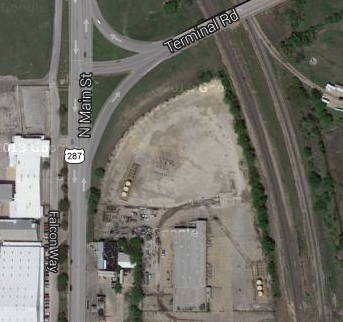
So, lets take a look at a shale gas drilling site in Fort Worth. Here's a portion from the air:
The runways you can see are those of Fort Worth Meacham International Airport. Can you see the shale gas well site? You've probably missed it, so I've circled the most obvious evidence - two rows of yellow tanks:
Lets zoom in for a closer look:
You can see the tanks more clearly now, although the well-heads themselves are harder to see. Slightly frustratingly, when you try to zoom in on Google maps, the view changes to an earlier photo, but this is actually a good thing because you can see the wells under construction: many containers of equipment around the edge of the pad, and only a couple of well-heads placed:
You can also go to StreetView to see the site up close and personal:

You can see the 9 well heads, with 'Christmas Trees' on top of them, and the tanks to one side. These tanks are likely collecting produced water coming up with the gas. You can see that there is no need for the big, open ponds for wastewater that have been blamed for causing problems in Pennsylvania (and which are illegal in the UK).

So, how much is this single pad worth? It has 9 wells. The average total production for US shale gas wells is currently something like 3 bcf (billion cubic feet) over their lifetime, so this pad is likely to produce 27 bcf. 1 bcf contains approximately 1 million MMBTU, so 27 bcf is 27 million MMBTU. The current US gas price is approximately $4 per MMBTU, so the total gas coming from this single pad will be worth over $100 million. In the UK, gas prices are currently more like £8 per MMBTU, so a similar pad in the UK might produce a volume of gas worth £200 million.

I'll admit to being a bit of a Google Maps/Earth geek, but it really is worth checking it out, so that you can explore the site for yourself from all the angles that StreetView provides. Here's the link, go and have an explore. And you can ask yourself, knowing the value of a single such well site to the UK economy might be over £200 million, can I, or can I not, accept their development in the UK? Personally, I struggle to think of many alternatives that can give as much buck for such a small footprint.


Wednesday, 10 July 2013

Breaking news: Geomechanical effects crucial for secure CO2 storage, experts warn!

Breaking news: Geomechanical effects crucial for secure CO2 storage, experts warn!

My paper, published this week in the Proceedings of the National Academy of Science, compares the geomechanical response to CO2 injection at 3 commercial-scale CO2 injection operations. This is the first time (after about 20 papers), that one of my publications has received press attention of any kind (so thanks very much to the good folks at PNAS for their work in putting together a press release).

Since this seems to be generating a modicum of interest, I thought I'd better run through a quick layman's summary of what we've found (also, I'm nervous about how the paper will be written up by non-specialist journalists, so this blog affords my a chance to put myself across in my own words).

The term 'carbon capture and storage' covers the whole process by which CO2 is captured at fossil fuel power stations, and rather than being emitted to the atmosphere where it will contribute to global warming, it is compressed and pumped to geologically-suitable places where it can be injected into deep rock formations, where it is trapped by overlying impermeable layers and permanently trapped. As an Earth Scientist, my particular focus is on the last, 'storage', phase of this process - ensuring that the injected CO2 stays buried in the ground.

The key is the aforementioned 'impermeable caprock'. Even if we start with the assumption that site operators have chosen a formation with a suitable caprock, the concern is that pressure increases caused by CO2 injection will begin to fracture the rock, ultimately creating enough fractures running through the caprock that the CO2 can escape. Such 'geomechanical' effects have been the focus of previous papers that are critical of CCS, most notably last year's Zoback and Gorelick paper.

In my paper we make observations of geomechanical deformation at 3 large-scale CCS sites: Sleipner, in the North Sea, Weyburn in Central Canada, and In Salah, Algeria. I say 'we' because I am hugely indebted to my co-authors from the BGS, from the GSC, and from BP, who helped to compile this comparison paper.

We found that the 3 sites exhibited substantially different behaviours. At Sleipner, the target formation is huge (it extends under much of the North Sea) and has excellent permeability, meaning that it soaks up CO2 like a spunge. As a result, there has been almost no pressure increase. As such, there is little risk posed by geomechanical deformation

At Weyburn, the field has experienced a long history of stress change from 50 years of oil production prior to CO2 injection. Geomechanical effects at Weyburn have been monitored using microseismic: geophones placed near to the reservoir that pick up the 'pops' and 'crackles' as the rock fractures. A total of ~100 events have been detected over 6 years, a very low amount. These are all located around the reservoir, suggesting little possibility of leakage. They were in fact mainly located around the production wells, an initially counterintuitive observation that can be explained by the long and complicated stress history of the reservoir.

In Salah has been the most geomechanically active of the 3 sites we looked at: over 1000 microseismic events were detected in only a few months. Deformation at In Salah was initially detected using satellite methods that picked up the fact that the ground surface had been uplifted by a few centimeters because of the pressure increase in the reservoir. The flow properties at In Salah are not great, (only 10 millidarcy or so),so injection has lead to substantial pressure increases, hence the surface uplift and the microseismic activity. We believe that the fracture at In Salah has extended 100-200m into the caprock. At In Salah the caprock is ~1km thick, so it's not posing a risk to storage security at this point, but it's an important lesson for future storage sites that might only have 100-200m of caprock.

Our key finding is the huge differences in geomechanical response at the different sites. This shows the importance of carrying out detailed geomechanical appraisal prior to injection at every future CCS site, and putting monitoring programs in place during injection to ensure that adverse geomechanical effects are not posing a risk to secure storage.

I'll finish with my thoughts on CCS more generally. Many people love to declare that CCS is an 'untested' technology, which, frankly, is rubbish. Statoil have been storing CO2 at Sleipner since  1995. EnCana have been storing CO2 at Weyburn since 2000. We know that it is technically feasible to store millions of tonnes of CO2 in the subsurface.

However, the problem is one of scale - it's a similar problem to that facing renewables - burning hydrocarbons with unabated emissions is so very good and providing a huge amount of energy for not very much cost, and no other method can really compete with this as yet. We know we can stick a wind turbine on top of a hill and it will generate electricity. But, as we saw in a previous post, you have to plaster a hole mountainside with them to generate as much energy over 20 years as you can get from a single shale gas well pad.

So it is with CCS: we know that we can put a million tonnes under the North Sea without too much  difficulty. But we need to be storing billions of tonnes every year to make a difference with respect to climate change. And if we are to do that, we may not have the option of being too fussy about where we store it. Given this, it seems inevitable that at some point a future CCS site will run into geomechanical difficulties. We should be prepared for this eventuality.
       

Thursday, 4 July 2013

On the radio again...

Boris Johnson has called for drilling companies to leave 'no stone unfracked' in their quest for shale gas, even if it means drilling under London (paywalled link).

Here's your favourite applied geophysicist talking to BBC Radio London about his comments:


At first glance, drilling in London seems a little crazy - surely there's not enough space! However, when you look across at the US, there is drilling in close proximity to large cities, most notably in and around Dallas-Fort Worth, where there are, for example, well pads within Dallas Airport, and on the University Campus. It is common practice to tuck these sites away in industrial estates, and to build pre-fab mock-buildings around the pad so that it cannot be seen. 

However, I suspect that it will be a while before shale gas drilling ever comes to London. Firstly, it's not clear whether there's any gas under London to exploit - companies are at present looking further to the south, in places like Balcombe. The BGS will be releasing a report covering the south of England next year, so we will have to wait until then to know for sure whether there's anything under London.

Moreover, even if there is economically recoverable shale gas under London, I think it will be a while before anyone moves to try to extract it. Although drilling in urban areas is possible, it is more expensive and challenging than drilling in relatively empty countryside. Moreover, we've already seen that there are huge volumes of shale gas to the north. I suspect that companies will be focusing their energies on the Bowland for the coming years - this will be the formation that determines whether UK shale gas succeeds or fails.

Sunday, 30 June 2013

Methane found around gas wells in PA. Methane also found not around PA gas wells....

Two more studies looking at the connection between shale gas extraction and water contamination have been released. One from the USGS, looking at water quality in areas of Pennsylvania that haven't yet been drilled, and one from the same Duke team that has in the past found evidence for drilling-related methane in groundwater in Pennsylvania, but did not find evidence for any contamination above the Fayetteville shale (in Arkansas).

The USGS study examined water quality in Sullivan County, Pennsylvania. Crucially, this study focussed on areas that have yet to be drilled for shale gas. So far in the USA such baseline studies have been rare, which means that it can be difficult to establish whether water has been contaminated by shale gas drilling, or whether it was already of poor quality to begin with.

As I have discussed in a prior post, it is wrong to assume that all groundwater was of Evian-quality prior to drilling: there are many potential sources of groundwater contamination, both natural and man made, that could have caused problems well before shale gas drilling began.

Therefore, although this USGS study hasn't received the press attention given to the Duke study, it could come to be seen as really important, because it provides a baseline against which changes caused by drilling can be assessed.

So what does the Sullivan County baseline look like? Well 85% of the 20 water samples taken contained at least some radon-222 above the US maximum level of 300 picocuries per liter (pCi/L), while 10% exceeded the alternate maximum level (I have no idea why the USEPA has a maximum level and then an alternate maximum level - what does that mean?) of 4,000 pCi/L. 35% of the wells had some methane in them, although only 2 samples (10%) had levels to get excited about: 4.1 and 51.1mg/L (the US maximum level is 10-28mg/L).

Importantly, the USGS carried out isotopic fingerprinting of the methane in these wells. It is possible to tell the difference between methane that has been created in the shallow surface by bacterial activity (so-called 'biogenic' methane) and that created at depth by heat and pressure (so-called 'thermogenic' methane), and it has been suggested that, where thermogenic gas is found, shale gas drilling is the likely culprit.

Unfortunately, the isotopic fingerprinting of the Sullivan County gas showed that is WAS thermogenic, in an area WTHOUT any gas drilling. Does this mean that the thermogenic/biogenic testing can no longer be used as the determining factor in the debate over whether methane is caused by shale gas extraction? I think at the least more caution might be required.

The main take-home point from the USGS study is that water quality in the region is highly variable. This means that, whether you believe that shale gas drilling has or has not caused contamination, proving your case either way will be very difficult, especially without baseline studies.


Moving on to the Duke study, which examined the water quality in gas-producing areas of Pennsylvania. Rather than bore you with statistical analyses about P<0.0007 for this and P=0.0001 for that (necessary for science, less interesting for blogs), I think the story would be better told with a couple of pictures. Firstly, where the groundwater was sampled (along with the locations of shale gas drilling):

and then the results - methane concentration plotted versus distance from shale gas wells:
There appears to be a clear correlation with increased methane concentrations near to gas wells.

The Duke researchers also looked at the isotopic composition of the methane gas, finding it to be thermogenic, and they also found ethane (a slightly heavier form of natural gas, not produced biogenically), implying that the gas must have originated at depth, and therefore be caused by shale gas drilling. I think that this part of their conclusions is slightly shakier - we've seen from the USGS study above that it is possible to have thermogenic methane, and smaller amounts of ethane, in areas that haven't seen drilling.

I also have some doubts about how the wells were chosen for analysis. You can see from the first plot that the wells sampled occur in clusters - they're very non-random. Above I pretended to chose not to discuss the statistics in the Duke paper to save the poor reader from a load of boring numbers. In fact, my concern is that such statistical analyses usually assume a certain degree of uniformity in a sampling process, and that doesn't seem to be the case here, so I'm not sure as to their validity.

In the methods section of their paper, the Duke team mention that they got their samples via Homeowner Associations. Although which homeowner associations these might be are not described, it seems likely that these are homeowner associations would be those opposed to natural gas drilling. In turn, such associations are presumably likely to have (a) elevated methane concentrations in the water and (b) gas drilling in the near vicinity. So, if your sampling is biased by choosing to select water from sites that match both descriptions, it's not particularly surprising to find homes near gas wells with elevated methane - because that's how your samples were chosen in the first place.

You can see this by looking at the distribution of sampling points in the above figure, which are clustered in certain places on the map, rather than spread evenly. To really robustly establish a link between drilling and methane contamination, a much more uniform sampling and testing program would be required. It's a shame that the Duke researchers did not do this, because they've left what could have been a really fundamental study open to criticism.

To summarise my thoughts - I think that it is likely that at least some of the incidences of methane contamination in the Duke study HAVE been caused by drilling. The example of Dimock shows a pretty clear case where of shoddy drilling practices leading to methane contamination. However, based on the sampling methods used, I'm not sure that this study, despite the media fanfare, actually adds anything to this. The real question we want to know is - are methane issues ubiquitous and inevitable, or do they represent a handful of 'bad apple' cases of poor drilling practice, the number of which can be minimised with good practice, strong regulation and good oversight? A more rigorous attempt to sample PA wells more uniformly is required (for example, many of the Duke samples do not have much/any methane in them).

Finally, keep in mind that methane, while a nuisance, is not toxic, and most private drinking wells should have filters to remove methane prior to the water entering the house. The Duke researchers also looked for other chemicals that might be associated with drilling. Opponents of shale gas often point to a smorgasbord of nasty-sounding chemicals associated with fracking fluids that they claim are polluting groundwater.

Much like their previous studies both in PA and elsewhere, the Duke researchers found no evidence for any of these chemicals. Nor would we expect them to: methane, being buoyant, has the potential to move up through the annular gaps and/or cracks left in a poorly-cemented well. Drilling and/or fracking fluids are not buoyant (i.e., they have similar densities to the brines that saturate the rocks at the depths of the shale reservoirs), so there is no force available to push them back to the surface - you may as well try to suggest that dumping sewage/pollution in London is going to contaminate the headwaters of the Thames in the Cotswolds. The water is simply flowing in the wrong direction.

So, because it's been another long and rambling post, a summary:
  • lots of the water in PA is of poor quality to begin with,
  • it is possible (likely) that there have been some instances of methane contamination,
  • whether these cases represent a few outliers, or are more ubiquitous, is not established by the Duke study,
  • and there is absolutely no evidence that any of the various chemicals associated with fracking fluids are getting into groundwater.


Thursday, 27 June 2013

BGS Finally Reveal Their New Bowland Shale Gas Estimates

It's finally here. We've been expecting it since January (date originally planned for publication), and the BGS have finally delivered. The definitive report on the amount of shale gas underlying Lancashire and Yorkshire in the Bowland Shale.

The headline figures: somewhere between 822 - 2,281 tcf (trillion cubic feet) of shale gas, with 1,300 tcf being the best estimate.

This map shows the area covered by the report:
The geographically astute amongst you will realise that this report only covers part of the UK. There is potential for shale gas in other parts of the UK as well, in particular the Southeast (centered on Sussex and Hampshire), South Wales, and parts of Scotland. Understandably, at present the media are treating this new number as a UK-wide number, but there could well be even more.

In case you are wondering what the green and red dots are on the map above, these represent existing oil and/or gas wells in the region. So onshore drilling isn't new to the area. The two maps below show the seismic lines and well logs used to create the report. You can see that there is a lot of data available - much of the wells and seismic will be legacy data from past exploration for the conventional fields shown above.


If you are a bit of a geo-geek, I really recommend you check out the UK Onshore Geophysical Library, where you can actually see all the wells and seismic data for yourself. They have a slick little interactive map viewer where you can plot all sorts of information.

So, what does 1,300tcf mean for the UK? The key thing to think about is recovery factors - how much of the gas can we actually get out of the ground. It has become conventional to assume a recovery factor of 10%. I'm not sure why, when US experience points to more like 20-30%, but lets be conservative and stick to 10%.

10% of 1,300tcf is 130tcf of produceable gas. Keep in mind that the UK's annual consumption is 2-3tcf. So 130 divided by 2.5 is 52 years of total UK gas consumption.

A different and perhaps more illuminating comparison is with the largest conventional gas fields in the world, which you can see here. 130 tcf of recoverable resource would place the Bowland shale as the 4th largest field in the world, behind only the Qatari Pars Dome and Russia's two largest fields.

If money, rather than volumes, is of more interest to you then consider: 130tcf is approximately 130 billion MMBTU. The current European gas price is something like $8 per MMBTU, so the total value of recoverable gas in the Bowland shale is something like 130 billion x $8 = $1,000,000,000,000, or $1 trillion dollars (cue much of this). Of course, that money will be shared out amongst the companies involved (and the many UK workers they will employ) and the UK government, which will take its cut via the taxman. It remains to be seen exactly how the government tax the shale gas industry - I hope they set up something similar to the Norwegian Sovereign Wealth Fund.

Of more immediate interest is the decision by the government to ensure that, as well as the taxman, local communities benefit from shale gas development. For every well pad, £100,000 will go to local communities, plus 1% of production revenues.

Let's examine those figures in more detail. A typical well pad might have 10 lateral wells diverging from a single pad. A typical total recovered volume for a single well in US is 3 bcf (billion cubic feet) per well (estimate from the recent IoD shale gas report). So a single wellpad might produce 30 bcf, or 30 million MMBTU, which at $8 per MMBTU is $240 million (or about £156 million). 1% of £156 million is £1.5 million. Add in the additional £100,000 fee and we're up to £1.6 million going to the local community, for a site covering a couple of hectares and looking something like this:

How does this compare in terms of electricity generation? 30 bcf of gas will generate 5,000 GWh of electricity. If a single well pad is operational for 30 years, that's an average of 166 GWh per year (in reality, more will be produced in the earlier years, with a decline through time). This compares with the average output of 150GWh that we get from from the UK's largest onshore wind farm, Scout Moor:
Many people assume that because I am broadly in favour of shale gas, I must be anti-wind. I am not: I think we should be doing all we can to develop and improve renewable energy technologies. Long term, all of our energy will have to come from renewables and/or nuclear technology. But the above two images show the challenge that this poses at present: we can get more energy from a single well pad covering a couple of hectares (a football pitch) than we can by plastering an entire mountain with 150m high turbines (and that's before we even get into intermittency issues etc).

Perhaps the UK government can spend some of its $1 trillion windfall on research on improving renewables, nuclear fission, or finally working out how to get fusion working...


Monday, 24 June 2013

Horizon: Fracking, a new energy rush by Professor Iain Stewart - a review

Shale gas and fracking got the big time BBC treatment this week with the airing of Prof Iain Stewart's Horizon special. Link is here, although be quick, because the BBC don't tend to keep them up (also, you probably can't see it unless you are in the UK).

<colossal name drop> I've been fortunate enough to chat to Britain's favourite geo-celebrity before on this topic </colossal name drop>, so I knew that this was in the works, although I wasn't expecting it to hit our screens so soon.

I'm also pretty sure, unlike the author of this blog, that the views expressed genuinely represent how Iain sees the subject. I don't think, to quote, that
that Prof. Stewart was ready to burst, he was holding back so much. It was the uncomfortable way he spoke to camera, I could almost sense the person behind the camera giving him a stern look. Be balanced, be careful, this is dangerous stuff. Hang on, let’s cut to you saying nothing and driving, that’s safer.
To be fair, there WERE a lot of driving shots. It seems to be the done thing for documentaries these days. Perhaps it is assumed that unless we see shots of the presenter travelling between locations we might get confused and think they're still in the same place.

However, I don't quite understand the surprise felt by many commentators over Iain's take on the topic. The view of pretty much every professional organisation that has addressed the topic, be it the British Geological Survey, the Royal Society, the Royal Academy of Engineers, is that shale gas extraction can be conducted safely, and that risks posed are not much different to conventional hydrocarbon extraction. That's not to say that there are no risks (everything we do carries a risk), but that those risks can be managed within the UK's already robust oil and gas regulatory regime. I'm not sure why Prof Stewart, a professional geologist, would be desperate to (and I quote again)
blown his top and started ranting at the camera. ‘For pities sake, wake up, this isn’t the solution, this is shortsighted madness! We drill and pump and waste billions of gallons of fresh water extracting this stuff, we burn it, we increase carbon in the atmosphere and then it runs out. Remember ‘North Sea Gas?’ Yes it’s easy and a stopgap and a final, last ditch frenzied attempt at keeping the crumbling edifice of the fossil fuel corporations going, but it’s insane.’
I think if you only read, say, the Guardian, on shale gas, you'd be fairly convinced that fracking is completely awful, and that no-one in their right mind could support it, unless you are a greedy Texan oil baron. It must then come as a bit of shock when someone like Iain Stewart, supposedly one of the good guys, the cuddly face of geology,  takes the view (as the majority of geologists do) that the risks of shale gas extraction should be entirely manageable. Hence the rather nasty comments suggesting that either Iain, or the producers, must surely have been in the pockets of big oil to commit such an outrage.

In all I feel it was a very balanced program. The best evidence for this is that after the show, @ProfIainStewart's twitter feed was bombarded with angry commentators from both sides of the debate castigating him for making such a biased program. If you're pissing off both sides, you're probably doing a reasonable job.

The first half of the show was dedicated to the benefits of shale gas extraction.  This included a visit to a Louisiana 'shale-ionaire', a man who received a $430,000 one-off payment, plus regular monthly royalties, for drilling rights on his farmland. It also showed the scale of shale gas extraction in the US: it's not limited to Pennsylvania and Texas (although these are two hotspots). There are over 1 million wells in over 30 states. Some people believe that there is more gas in the US than there is oil in Saudi Arabia. The effects the shale gas revolution on the economy, and in particular the attraction of cheap energy to manufacturing and chemical industries that are 're-shoring' to the US was mentioned.

Particularly interesting was the visit to the National Grid control center, during the Strictly Come Dancing finale. As the show ends and everyone in the UK makes a cup of tea, the demand spikes and the Grid brings on extra power to meet this demand. I'd heard of the so-called 'TV Pickup' effect before, but it was still fascinating to see it in action. We are all so accustomed to receiving electricity quite literally at the flick of a switch, and we so rarely think about the sheer complexity of infrastructure needed to deliver it too us! It really is mind-blowing when you step back to look at it.

The scale of this infrastructure was further demonstrated by the visit to the Isle of Grain LNG terminal, where gas from Qatar is landed. The scale of the holding tanks and the size of the tankers were quite astounding - quite literally like a wall of steel as Iain describes it. The tanker is 1/4 of a mile long, and carries enough gas to power 70,000 homes for a year. Which is just as well, because 40% of our electricity comes from gas, and more than 50% of our gas is imported. This highlights the often underestimated issue of energy security - gas tankers are highly flexible, so if the Qataris ever decide to sell their gas to someone else, or someone else decides to pay a higher price for it, we'd begin to run out of gas pretty quickly. Hence the geo-political importance of 'home-grown' energy to buffer us from these consequences.

Having looked at the potential benefits, the second half of the program heads to Pennsylvania to examine some of the potential issues. Iain meets with a family, the McIntyres, who list a series of health problems that they associate with contaminated water caused by nearby gas drilling. It seems the whole community is scared of their water, and now only drink from delivered bottles. The McIntyres admit that it has been difficult to prove this link scientifically, and this comes across in the program: lots of complaints, not a lot science to back them up.

The confidential make up of drilling fluids was also mentioned. There's little doubt that drilling companies made a strategic blunder in trying to keep this information secret. There reason for doing so - the desire to keep commercial secrets from their competitors - is technically a valid one, but only if you are thinking mainly of your competitors, not the general public. Because if the public see you are keeping secrets, they will assume you have something to hide. The industry is starting to come around to this fact, and more and more wells are registered on FracFocus, but from a PR point of view this horse (and trust in the industry) has long bolted.

One of the few scientific studies that has found any kind of link between methane contamination and drilling is the famous Duke study, which receives some air time at the end of the show. It's worth bearing in mind that this study hasn't gone without substantial criticism (see here, here and here (last link is industry funded and not peer reviewed, but worth including)). This included Iain performing the now famous lighting of the water due to methane content, and the debate continues as to what extend groundwater methane is naturally occurring, and to what extent it has been exacerbated by drilling.

Overall, I think the final point is right on the money: UK shale gas operations will likely look very different to the US shale gas experience - the operating culture, the regulatory system, and the mineral rights systems are all completely different. However, it is up to British scientists and engineers to prove that they know the risks, and that they can manage the risks safely.


The thing that impressed me most about the program however, wasn't any information about shale gas. Having been involved in the topic for some time now, there wasn't a lot to surprise me. What I really enjoyed was that, perhaps unintentionally, it showcased real geoscientists doing what real geoscientists actually do.

We're not short of popular outreach in the geosciences (especially thanks to the work of Prof Stewart et al.). However, geoscience in the media tends to revolve around dinosaurs and disasters. Super-volcanoes and Stegosaurus. Tsunamis and T-Rex. In fact, only a small portion of geoscientists are palaeontologists or vulcanologists, especially in the commercial world outside of academia. This is leading to public misunderstanding of the work geoscientists do, perhaps exemplified by the incident of Iain Duncan Smith, the geologists and the shelf-stacker.

During this program, we got to see drilling engineers alongside the incredibly complex surface operations - that spaghetti-like tangle of hydraulic lines - needed to conduct a well stimulation. Such incredibly complex engineering that we rely on completely just to go about our daily lives!

We saw a geophysicist using 3D seismic data to work out where the shale rocks were, 3 to 4km beneath us, and using microseismic event locations - pops and cracks that carry no more energy than a dropped bottle of milk, detected and located with pin-point accuracy on arrays of geophones kilometers away - to map exactly how far and in what directions the stimulated fractures went. The geophysicist points out that, as the first person to look at the 3D seismic data, he really is the first living thing to 'see' these rocks since those dying organisms, whose organic matter eventually transformed into methane, were buried 350 million years ago. Astounding!

We saw Iain himself go in for a bit of palaeofacies reconstruction in some Peak District caves, using information from sedimentary structures and fossilised corals and plant matter to reconstruct the enivronmental conditions hundreds of millions of years ago, to work out where the coastline would once have been, and therefore where the best places to drill might be. What to the untrained eye might be a boring-looking grey rock, actually contains a wealth of information about what the world was like 350 million years ago!

We saw inside the BGS core store, where 250km of core samples from across the UK, logging the depths beneath our feet, are stored. We saw how electron microscopes are used to see the tiny, tiny pores within shale rocks, which may only be 5 nanometers across. These tiny pores may be pretty-much invisible to the naked eye, yet in sufficient number they allow apparently rock solid, dense shales to trap trillions of cubic meters of natural gas!

Finally, we saw hydrologists conducting water sampling across Pennsylvania. Not glamorous, perhaps, but vital work to guarantee the health and livelihoods of people who rely on that water! 

There's so much more to geoscience than the big box-office sellers: dinosaurs and natural disasters. I'm glad that, perhaps unintentionally, this program was able to show that.


Saturday, 8 June 2013

Heard it on the radio

Update (9.6.13) I think first my attempt to attached audio via blogger failed. Hopefully they should be working ok now (so long as your browser supports html5).

Things often occur in twos. This week I've done two radio interviews out of the blue, both on 5Live.

The first interview (below) on 5Live Drive was in response to the new IGas announcement of their resource estimate of 100tcf of gas in their licence area. I'm not particularly happy with my own interview, because I wanted to get across, and was unable to, was the sheer uncertainty in this estimate. The media have focussed on the upper bound figure of 170tcf of resource (for reference, UK gas use is something like 2-3 tcf per year), but in fact the estimate range was from 15 to 170 tcf, with 100tcf being the most likely number. Add in uncertain recovery rates (anywhere between 5 - 50%) and you can see how uncertain the numbers really are. At the low end, 15tcf at a 5% recovery rate gives 0.75tcf, less than half a year of the UK's annual use, at the upper end, 170tcf at 50% recovery gives 85tcf, enough to completely cover the UK's gas use for the next 40 years.

Keep in mind of course that this estimate is for the IGas license block, with has an area of 300 square miles, or an area 17 miles by 17 miles, so although the estimate is very uncertain, it only accounts for a very small part of the country.

Also on the show was Phelim McAleer, director of FrackNation, which could be described as a response to Gasland - well worth watching if you can get hold of a copy - who is strongly in favour of shale gas development based on what he has seen in the US.


Having been on 5Live Drive, my name and number have clearly been put on the 5Live database of frackers, because I got a late night call to take part in a post-BBC-Question-Time phone-in debate, a part of which was given over to fracking, after a question on the topic during the main show. The question during the debate was very incoherent, and sadly the lady in question came of looking a little mad, but the 3 interviewees during the phone in were all broadly pro-shale gas. Again, though, I personally think I might need a little more media training to learn how to put myself across more effectively, without so much umm-ing and err-ing. But maybe that's just me, we all hate the way we sound when played back, right?